story
Seven years on her website. Not one real lead.
Samantha Enos gives her clients a luxury level of service, and her business runs on their referrals. Online, none of that showed. Here’s what our gap analysis found, what we built, and where her business stands now.
Why this matters to every agent
Your next seller will call one agent. Will it be you?
Most sellers don’t shop around. They call the agent a friend recommends, or the one they used last time. That makes two things matter more than anything else: being easy to find when someone passes along your name, and staying the agent past clients remember.
of recent sellers contacted only one agent before hiring the one who sold their home.
National Association of REALTORS®, 2025 Profile of Home Buyers and Sellers
of sellers hired an agent they were referred to, or one they had worked with before.
NAR, 2025 Profile of Home Buyers and Sellers
of buyers would use their agent again or recommend them.
NAR, 2025 Profile of Home Buyers and Sellers
of the typical REALTOR®’s business comes from repeat clients, and another 22% from their referrals.
NAR, 2026 Member Profile
of REALTORS® have a website. Having one isn’t the edge anymore. Being found, and remembered, is.
NAR, 2024 Member Profile
The agent
A luxury level of service. None of it showed online.
Samantha Enos is a Windermere broker in the Greater Seattle area. Long before the market began to turn, she pictured a business built around luxury sellers, and her clients already got that level of service from her.
Her website, her emails and her follow up told a different story. They looked like every other agent’s. A seller who heard her name from a friend and looked her up had no way to tell she was the one for the job.
She came to Velvet Rook for one thing: more AI in her business.
In person
- Service built for high expectations
- Clients who came back, and sent friends
- A clear picture of who she wanted to serve
Online
- A basic brokerage template
- Impersonal template emails
- A site Google was told not to show
How we work
We don’t start with a fix. We start with a gap analysis.
Samantha asked for AI. We could have built it on day one. Instead we looked at her whole business first: how people find her, who her marketing speaks to, what happens after a closing, and where her hours go.
The gap analysis showed where she was losing ground, and something bigger. The clients she wanted most weren’t the majority of her business yet. Everything we built starts from that.
One
Gap analysis
The whole business, not just the website. What’s working, what’s missing, and what it costs.
Two
Positioning
Ideal client profiles for the clients she wanted most, so every page and email speaks straight to them.
Three
The front door
A website that brings her the right leads, and tells every referral she’s the one for the job.
Four
The rest of the gaps
Email campaigns, a client journey, and AI operations that take the admin off her plate.
No agent can be the marketer, the web designer, the search expert and the agent. Great agents have a team behind them. That’s what we build.
What the gap analysis found
Why her real estate website wasn’t showing up on Google
Samantha’s website was a basic brokerage template. A setting in its code told Google not to show it to people searching for real estate agents in her area. Changing that setting was hers to do. But how would she know? Her expertise is real estate, not web design, search or marketing, and this was one of dozens of jobs that are too much for one person to handle.
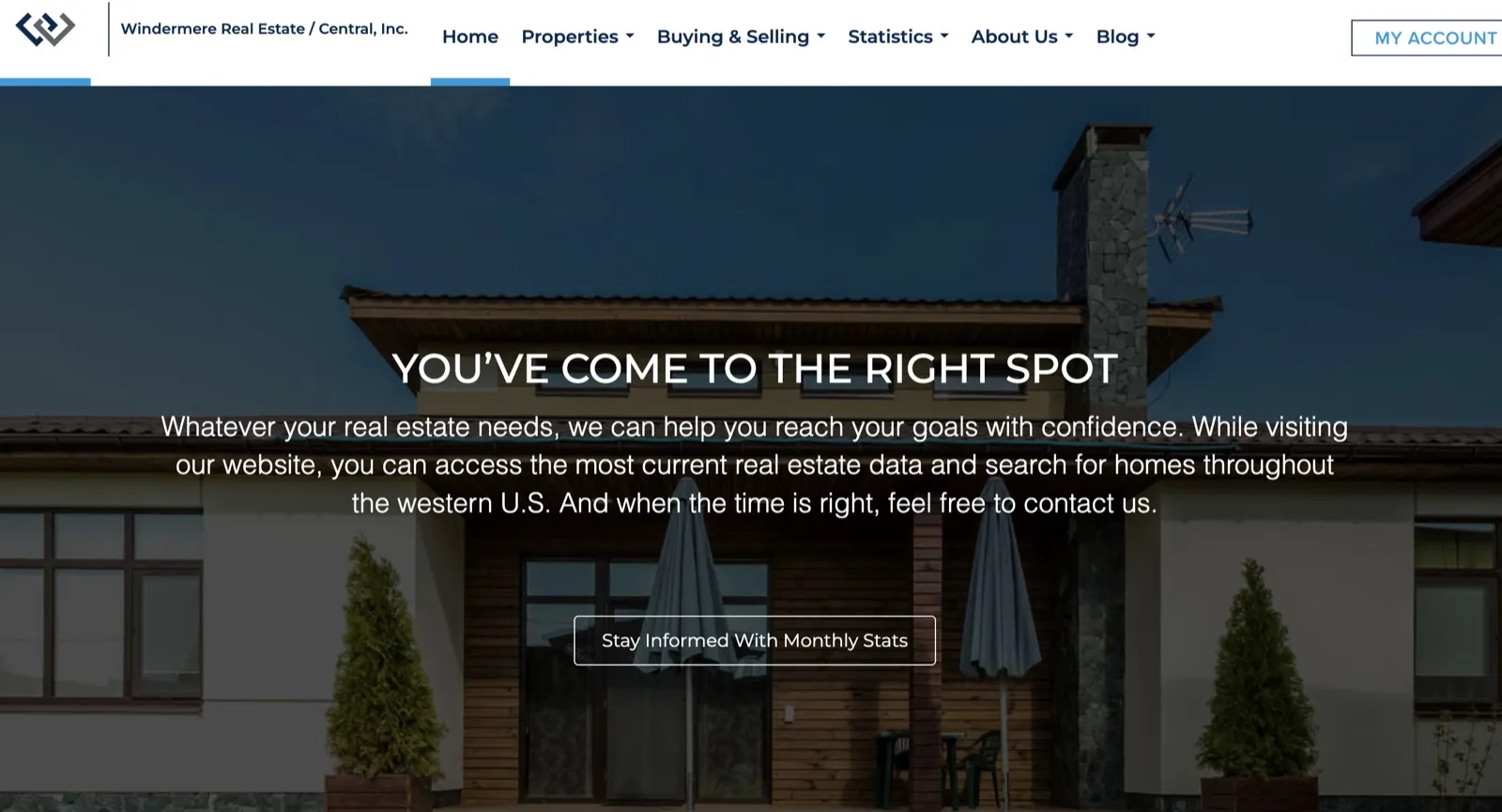 12345
12345- 1Her name wasn’t on it. The top of the page carried the brokerage’s name, like every agent’s site in her office.
- 2A headline for anyone. “You’ve come to the right spot” could sit on any agent’s site.
- 3The wrong map. “Search for homes throughout the western U.S.” She sells the Greater Seattle area, specifically.
- 4No way to reach her. The only button signed visitors up for monthly market stats.
- 5A stock photo. No sales history, no client stories, no testimonials. Nothing a luxury seller could check.
- 6Told not to show. One setting kept her out of Google’s results. It’s the kind of detail that slips when one person does every job.


It’s their template and they host it. I have my own URL, but it’s just redirecting it back to the site. I can try to customize it, but there’s only so much we can do.
Built for someone else
She wanted luxury sellers. Her old site spoke to first time buyers, and looked like every other agent’s in her office.
Newsletters with her photo on top
The emails going out under her name were the same templates other agents sent. People unsubscribed.
In her wordsIt doesn’t feel personal at all. … they just put my picture on it.
Open houses on paper
Most visitors skipped the sign in sheet. The ones who signed were hard to read, so good leads got lost on the way into her CRM.
In her wordsThe emails don’t make sense because it just isn’t typed or written really well. And you can’t tell.
No analytics
No way to know who visited, what they searched for, or what they read. Every decision was a guess.
Her best source of business had no plan behind it
Past clients and their referrals brought in more of her business than anything else. Yet her only referral ask was one line in her closing day email, after a request for repeat business and a review, and it got lost. After that, the only thing that reached past clients on its own was a template newsletter.
Positioning
Speaking straight to the clients she wanted most
The clients Samantha wanted most weren’t the majority of her business yet. To win more of them, she had to speak to them directly, on every page and in every email. And when a friend passed along her name, the seller who looked her up needed to see, right away, that she was the agent for them.
Most agents are afraid to narrow their focus, because it feels like turning business away. We see the opposite. Trying to speak to everyone is what makes an agent easy to forget. So before we designed a single page, we wrote Samantha’s ideal client profiles. Her positioning, her website and her client journey all grew from them.
Her ideal client, simplified
What we built
A front door to her business, not a brochure
Most agent websites are brochures: a place to look up a phone number. We build the front door to an agent’s business. It brings in the right leads, and it tells every referral who looks her up that she’s the one for the job.
When an agent’s business runs on AI operations, the website is where the work starts. So how we build it, and everything we think about while we do, reaches far past the website and into the rest of her business.

Her website
A custom site on the domain she’s always had, in her voice, built around the sellers she wants.
- SEO & GEO optimizedA site built for Google, ChatGPT, and more to find
- What’s workingAnalytics and Google Search Console from day one
- Follow up on its ownA fast reply to every new lead
- A year of careThe client journey after every closing
- Content in her voiceThe Content Creator turns a few minutes of talking into a week of posts
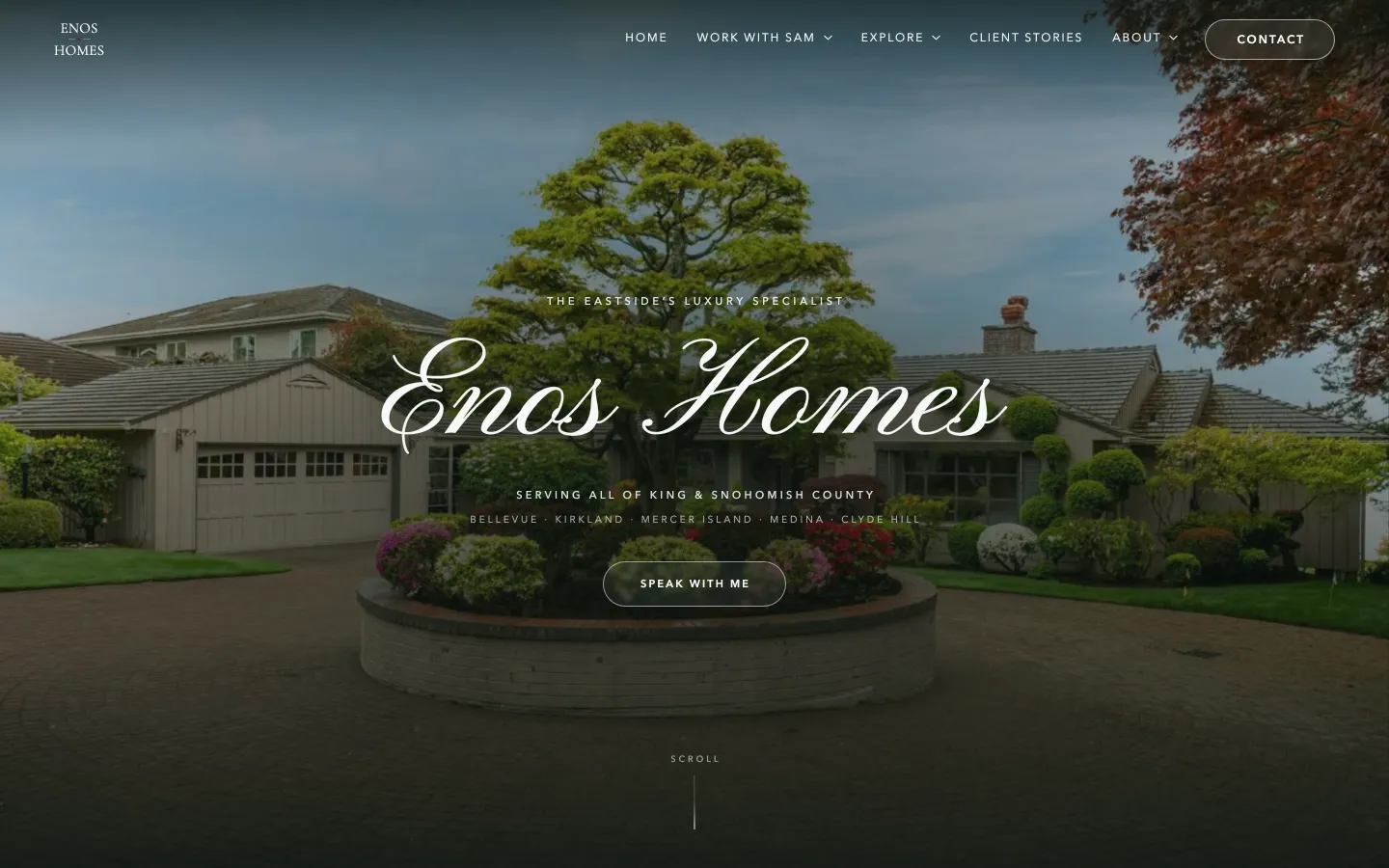 1234
1234- 1Her name. Enos Homes, top left, on every page.
- 2Her client. “The Eastside’s luxury specialist.”
- 3Her map. Bellevue, Kirkland, Mercer Island, Medina, Clyde Hill.
- 4Her inbox. “Speak with me” goes straight to her.
Her site, page by page
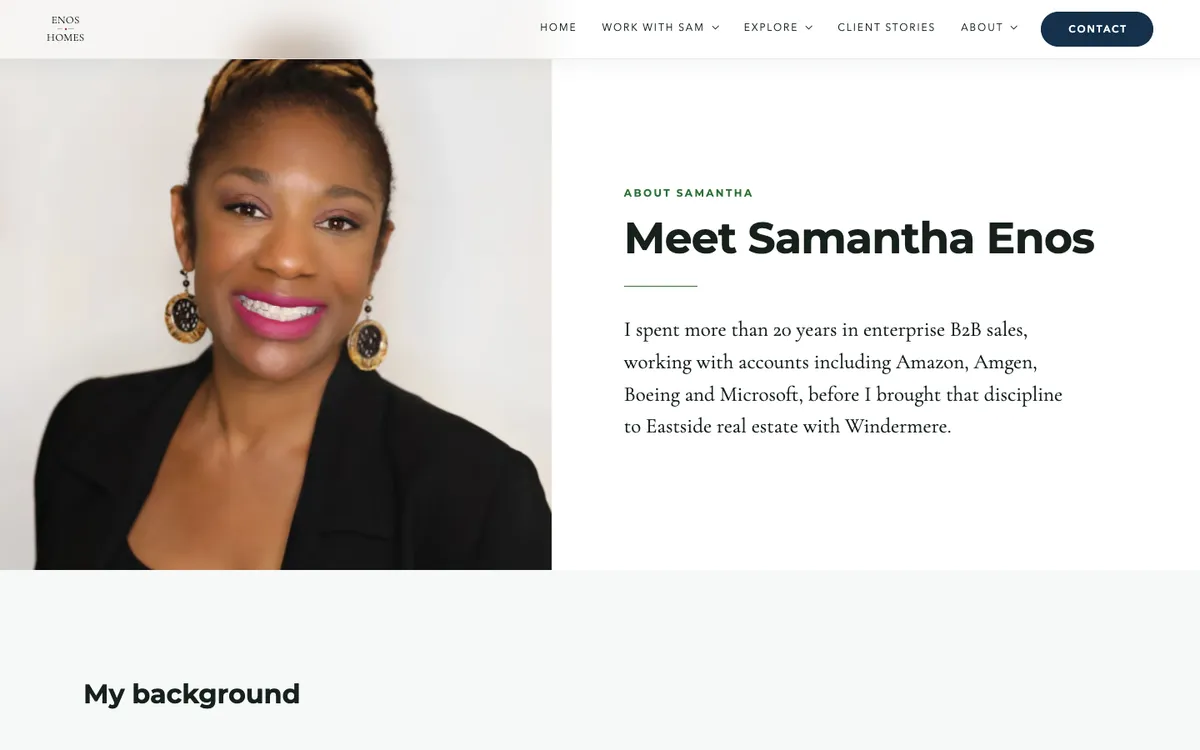
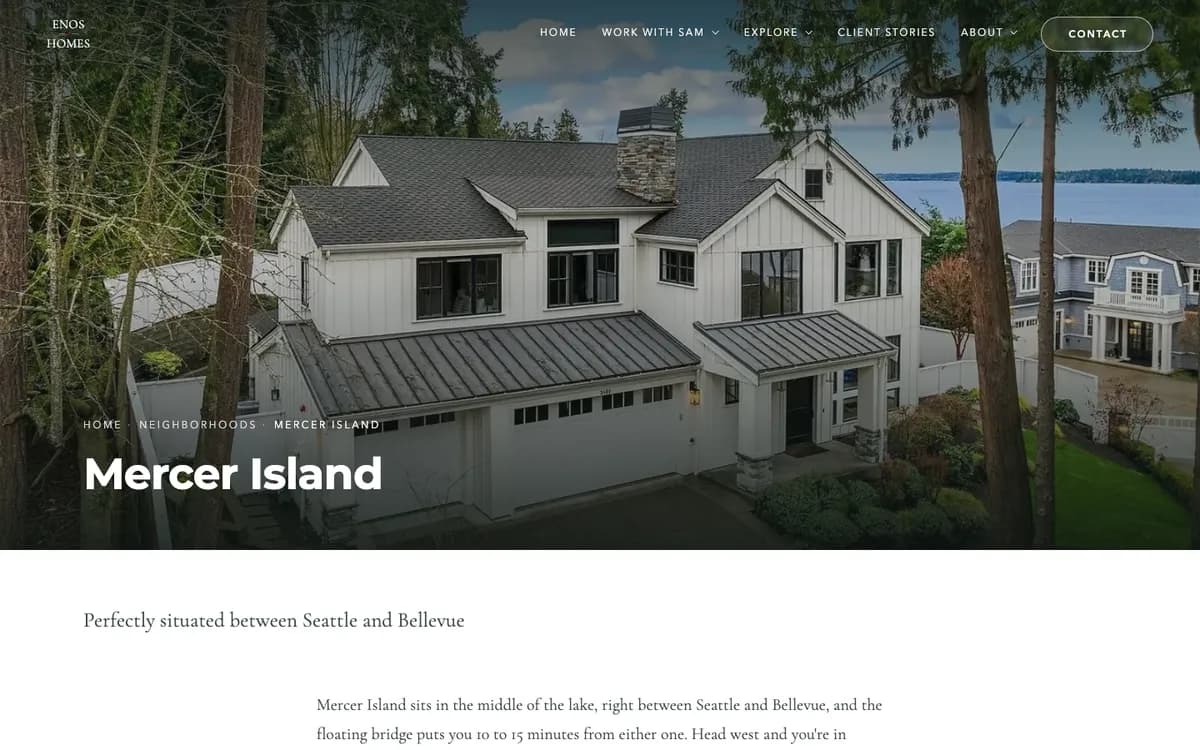
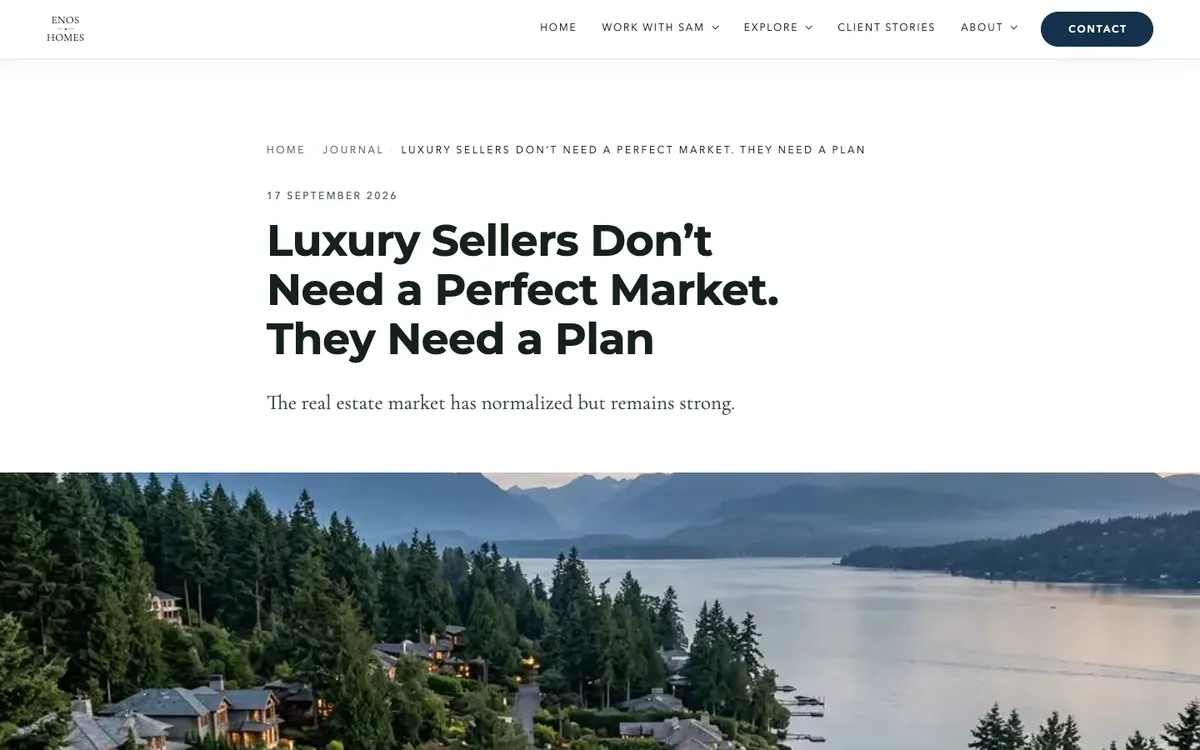
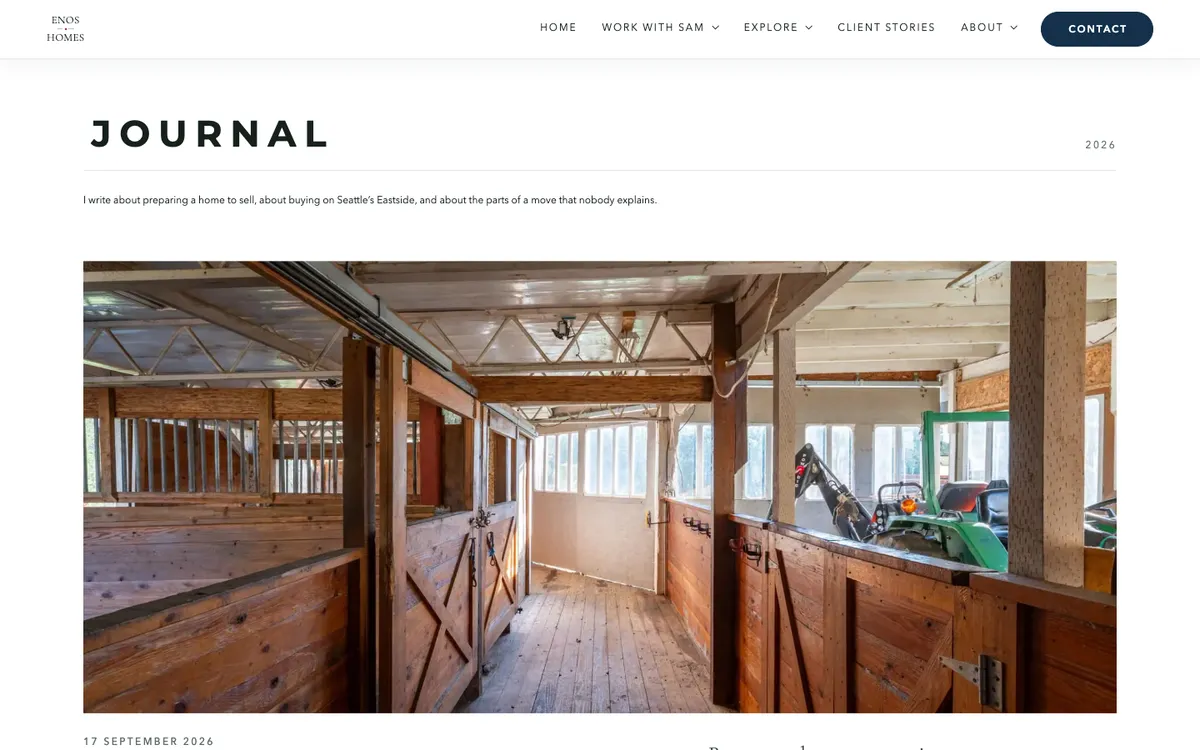
Built for an agent’s business
Fair Housing, checked before anything goes live
Real estate has rules most web designers never think about. So compliance is part of how we build, not an afterthought.
The words on Samantha’s pages are checked against Fair Housing rules before they go live: nothing about schools, families, children, safety, crime or who lives where.
- Automatic Fair Housing checks on her page copy
- A Fair Housing notice and the right marks in her footer
- Legal pages written by counsel, and an accessibility statement
- The same kind of check on every post The Content Creator drafts
No filter catches everything. These checks help an agent’s site stay compliant, and the agent is always the final check.
Built to be found
Easy to find on Google, and easy for AI to read
More sellers now ask ChatGPT, or Google’s AI answers, who to hire and what their home is worth. Those answers come from websites the AI can read and trust.
So we built Samantha’s site for both. Under the design, every page tells search engines and AI assistants exactly who she is, where she works and what she knows, in the format they read best.
In one marketing firm’s audits, 58% of real estate and construction brands never came up in ChatGPT, Perplexity, Claude or Gemini answers.
Boring Marketing, AI Visibility Statistics (live dataset, September 29, 2026)
Her site, as AI reads it
"@type": "RealEstateAgent",
"name": "Samantha Enos",
"parentOrganization": "Windermere",
"areaServed": ["King County",
               "Snohomish County"]
Her robots file
User-agent: GPTBot
Allow: /
User-agent: ClaudeBot
Allow: /
User-agent: PerplexityBot
Allow: /
- Open to AI assistantsChatGPT, Claude, Perplexity and Google are all welcome. Nothing tells them to stay away.
- A profile machines can readStructured data spells out her name, her brokerage, the counties she serves and what she knows.
- A guide written for AIAn llms.txt file: a short map of her site, made for AI assistants.
- Pages that answer questionsFive neighborhood pages and her journal answer what her sellers ask, on her own domain.
- Nothing lost in the moveHer old page addresses now point to her new pages, so links people saved still work.
- Google knows it’s thereHer sitemap is in Google Search Console, so Google knows every page exists.
At a glance
Before and after

After the closing
From a template newsletter to a year of care
Referrals were already her best source of business, so we built the part that earns them. Every closing now starts a year of care: personal notes at the moments that matter, a monthly email she owns, a mailer only for people who want one, and three referral asks, each one earned first. Samantha approved her plan, and it’s going in now.
Before: the same email, every month
After: six sample months, not her actual plan
Where her business stands today
Her new site went live in September 2026.
to Google search since launch day. For the first time, people who search can find her.
business that takes work off her plate, so she can focus on what matters.
brand positioning to help her stand out from a sea of other real estate agents.
I am loving everything about it.
What comes next
The front door is open. Now the house gets to work.
Follow up on its own
Forms connect to automatic follow up, so a new lead hears back fast, even on her busiest day.
Content in her voice
The Content Creator turns a few minutes of talking each week into a week of posts in her voice.
More AI employees
Each one takes a job off her plate, so more of her time goes to clients and less to keeping up.

Samantha didn’t have a work problem. She had a reach problem. Now her business has a front door, and it’s open.
Get the next client story
How agents are getting found, remembered and referred. One short email when there’s something worth reading.
Questions agents ask us
Why isn’t my real estate website showing up on Google?
A common reason is a setting that tells Google not to show the site. It’s easy to miss, and a template or an old redesign can leave it on without anyone noticing.
Should I use my brokerage’s website or my own?
Your brokerage site can be useful, but for agents with big goals you’ll want something more custom. A site that reflects you and speaks to your ideal clients can go a long way towards improving how you market your business.
How do I get my real estate website to show up in ChatGPT?
No one can promise it. What you can do is make your site easy for AI to read: let AI assistants in, describe yourself with structured data, and answer the questions your clients ask, on your own domain. That’s how we built Samantha’s.
How do I get more referrals from past clients?
Stay in touch in a way that feels personal, and ask at the right moments, after you’ve helped. Most sellers hire an agent they were referred to or have used before, so the year after a closing matters as much as the closing. A simple plan beats relying on memory.