Insights / AI in business
Stop Building AI Employees for Your Business
The short answer
Start with the outcome you want and the gap standing in the way. Then decide whether AI belongs anywhere near it. After you know the gap, AI is a powerful tool for the problems you never had the time, money or energy to solve.
A lot of people online will tell you the way to start with AI is to plan which AI employees your business needs. Find your pain, then hire an AI employee for it.
Not good at marketing? Build a chief marketing officer.
In a sales slump? Here's a prompt for an AI sales rep.
You get the idea.
It's not exactly a bad place to start. I just think it misses the bigger picture. Here is the question I would ask before you build anything.
Back in my corporate days, I was a Chief People Officer, which is a fancy title for HR. My teams and I were responsible for recruiting and hiring people at a billion dollar corporation down to VC-backed startups.
More than once I had to have a conversation with a promising manager who hired the wrong person into the wrong role. I even had conversations with leaders who couldn't understand why letting a newly promoted individual contributor manage 15 direct reports was a bad idea.
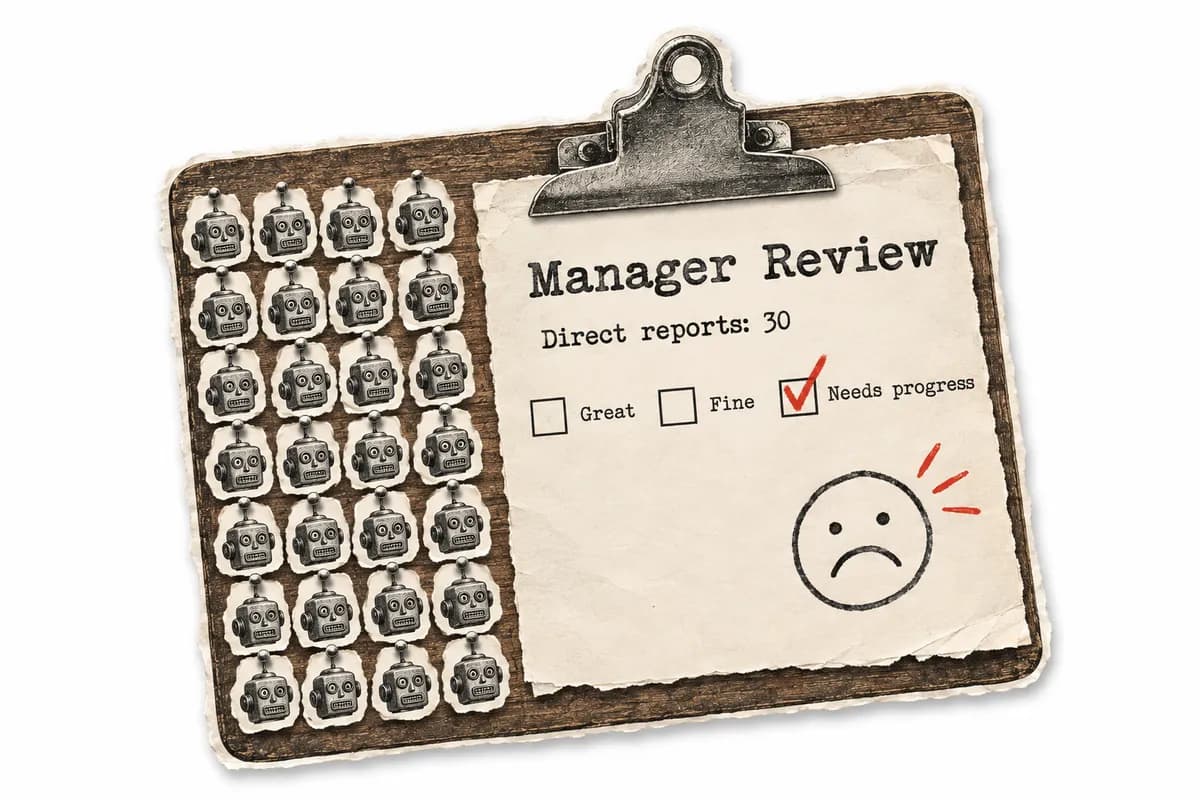
When that manager was showing signs of burn out, I knew their span of control was one of the culprits.
- Span of control
- The number of direct reports a manager has.
When it comes to managing a lot of employees, more isn't always merrier. Meta, Amazon, Microsoft and Oracle have each cut thousands of jobs in the past 18 months (not cool), and several pointed to AI. Before that, many tech giants used the number of employees at their company as a signal of success.
Turns out that a high employee headcount doesn't mean you have a great business, and it definitely doesn't mean you're a great leader.
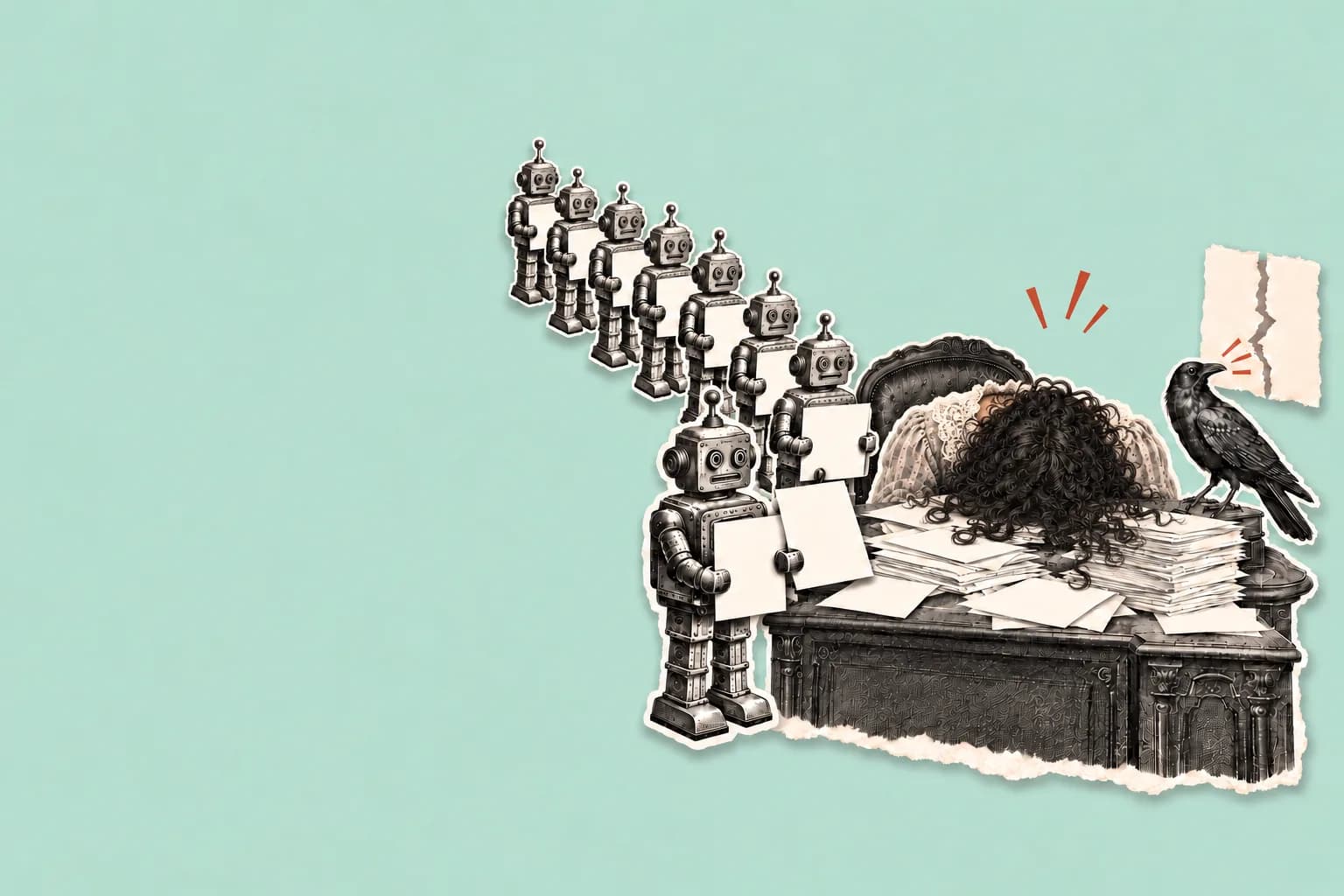
Now picture this: You're a busy solo entrepreneur and small business owner and you decided to open Claude or ChatGPT and build yourself 30, 40, 50 AI employees.
Who is responsible for managing, editing, and approving the work of all those employees?
Why shouldn't I build a team of AI employees?
Because you didn't get into your business to become a micro manager of software. Just like with human employees, you cannot be an absentee manager and expect your business will succeed. And with more AI employees comes more chances for work to stop because you become the bottleneck.
Just like with human employees, you must onboard, train, manage, coordinate, review work and even pay (tokens aren't free) your AI employees.
You're the one who has to talk to the chief marketing officer, the sales rep, the Instagram guru, or whatever clever name you gave them. You start the conversation. You press the button. You take the finished output and use it as the input for another employee. Whether you have 30, 40, 50 or 100 of them, that part never moves off your desk.
Centering AI should never be your reason for using this technology. The point is outcomes. Real, positive outcomes that move your business forward. Think about your business as a set of systems, or better yet, as a set of results you want, and ask what is standing between you and each one.
Where should a small business start with AI instead?
Start with the outcome you want and the gap standing in the way. Then decide whether AI belongs anywhere near it.
I do this with clients all the time, and almost without fail the gap is something they hadn't thought about. Not because they're not great at running their business. On the contrary, they focus their attention on the problems that need them most at any given time. It can make working "on" the business a difficult task.
A realtor client of mine came to me several months ago and said, "I need to fix my prospect to lead process." Turning prospects into paying customers is a common problem entrepreneurs run into, and I didn't doubt they needed more business. So, I ran a gap analysis and sure enough.... that wasn't the biggest gap.
She had more than 1,000 people in her CRM and I learned that she never asked her past clients or connections for referrals. Hundreds of people who know, like and trust her, and are willing to vouch for her if she only popped the question.
She said it was hard and she didn't know how to ask or what to talk about.
So I built a custom setup with her in mind and we went through it together. She decided to take it slow and reach out to only 23 people. Within less than 24 hours:
- 4 people replied
- 3 of those 4 scheduled a face-to-face meeting to talk business
I'm telling you exactly what happened, because it came from looking at her business differently instead of building a team of AI employees and hoping they can work some magic.
How do I find the gap in my business?
You find the gap by setting a numerical goal and working backward: where you are today, what helped you grow last year, and what is blocking you now. Then you check those answers against the eight problems below. I cannot recommend running a gap analysis highly enough. I run them with clients and I use them personally. Here's how you can get started:
This is the short version of what I do for clients.
Start with four questions. Your answers show you which of the eight problems below to check first:
- Your goal. Make it financial or numerical. For example: grow revenue 30 percent year over year or close 5 new customers this quarter.
- Where you are today against that goal.
- What helped you grow last year.
- What is blocking you now.
These are the eight problems most small businesses run into:
- Demand: who needs what I offer, and who is willing to pay for it?
- Differentiation: why would someone choose me over somebody else?
- Customer acquisition: how do the right people find and trust me?
- Converting: how do I turn that interest into a purchase?
- Delivery: how do I deliver on what I promised?
- Retaining and getting referrals: how do I keep customers, earn repeat business and get referrals?
- Profit and cash flow: does what I sell make enough money to pay the bills when they're due?
- Capacity and control: how do I manage the work efficiently?
Then look for four signals:
- Reviews that show your client experience isn't ideal.
- A boom and bust cycle. Busy, then quiet, because leads slip while you're working in the business.
- Tight cash even when sales look fine.
- Everything waits on you. Work stalls when you step away.
Now go back to the last question, what is blocking you now. When I work with clients, one of the first things I ask is what they think is the biggest roadblock stopping their business from succeeding. It's a really good signal. Which of the eight problems does yours sound like?
Then ask someone else. A friend, a business mentor, a community of other owners. Tell them the problems your business is facing: I have a problem with sales, I'm having high returns, whatever it is. No one knows your business better than you do. But we get too close to it, and an outsider can see the bigger picture.
Get the Gap Inspection. Circle your biggest gap, fill in one prompt, and find your next move. It also shows when the answer isn't AI at all.
What if the gap isn't AI?
Then you shouldn't use AI for it. Sometimes the answer is a phone call.
A different client had well over 1,500 contacts in a CRM she barely touched. She wanted leads, and she was thinking about social media. I told her, "Why don't you just go through your CRM and start making calls?"
We did build a tool that surfaced who she should contact first, and it helped push her to get in touch and have those conversations. But it was not AI that did the work. It was the owner picking up the phone.
Where does AI fit then?
After you know the gap, AI is a powerful tool for the problems you never had the time, money or energy to solve. It is one tool in the toolbox, and it works best when you hand it a specific problem.
Here's the plan. Pick the one of the eight problems that costs you the most, then paste this into Claude or ChatGPT:

I want help finding the one gap in my business and one next move. My business: [what I sell, and to whom, in one sentence] My goal: [a number and a date] Where I am today: [my number now] My biggest gap: [the one I circled] One thing I already tried: [optional] Tell me, in this order: 1. Whether the gap I picked is really my biggest, and why. If you think another one is, say which. 2. One next move I can finish this week, with the first step. If the answer is a phone call or a conversation, say so. Only use AI if it truly helps. 3. What result I should see, and how I will know it worked. If something critical is missing, ask me up to two questions, then answer.
Answer whatever it asks you. Then do the one next move before you ask for a second.
If you wear every hat in your business, I wrote more about AI for small business owners who wear every hat. And if you sell homes, AI for real estate agents shows what that looks like in your day.
Get the Gap Inspection. The worksheet has the eight problems and the prompt, so you can run the whole thing in one sitting.
If you would rather build these one at a time with help, that is what AI Operations is for.
Remember span of control? If you're going to be the one pressing the button, it should be the right button. And somewhere in your business is a problem you never had the time, money or energy to solve. Now you have a tool that can help you get it done.
KC
Sources
- Meta layoffs, about 8,000 cuts, May 2026 (Yahoo Finance)
- Amazon lays off 14,000 corporate workers, October 2025 (NPR via WEKU)
- Microsoft, 9,000 cuts, July 2025 (Procurement Magazine)
- Microsoft set to cut thousands more jobs, July 2026 (GeekWire)
- Oracle headcount down about 21,000 in the year to May 2026, AI cited in its 10-K (Engadget)
Questions people ask
What is an AI employee?
An AI employee is the name people give to an AI set up to handle one role in a business, such as a chief marketing officer, a sales rep or an Instagram guru. It still needs a person to start the conversation and press the button. That person is usually you.
How many AI employees does a small business need?
There isn't a magic number, and more is not the merrier. Every AI employee is one more thing you have to manage, so the count can make you the bottleneck. Start with the gap in your business, then add only what closes it.
Where should a small business start with AI?
Start with the outcome you want and the gap standing in the way. Set a financial goal, check the eight common problems and the four signals, and ask an outsider what they see. Then use AI on the problem that comes out on top.
Is AI still worth using in my business?
Yes, once you know the gap. AI is a powerful tool for problems you never had the time, money or energy to solve. It is one tool in the toolbox, and sometimes the right move is a phone call instead.